.svg)


US Bank Center





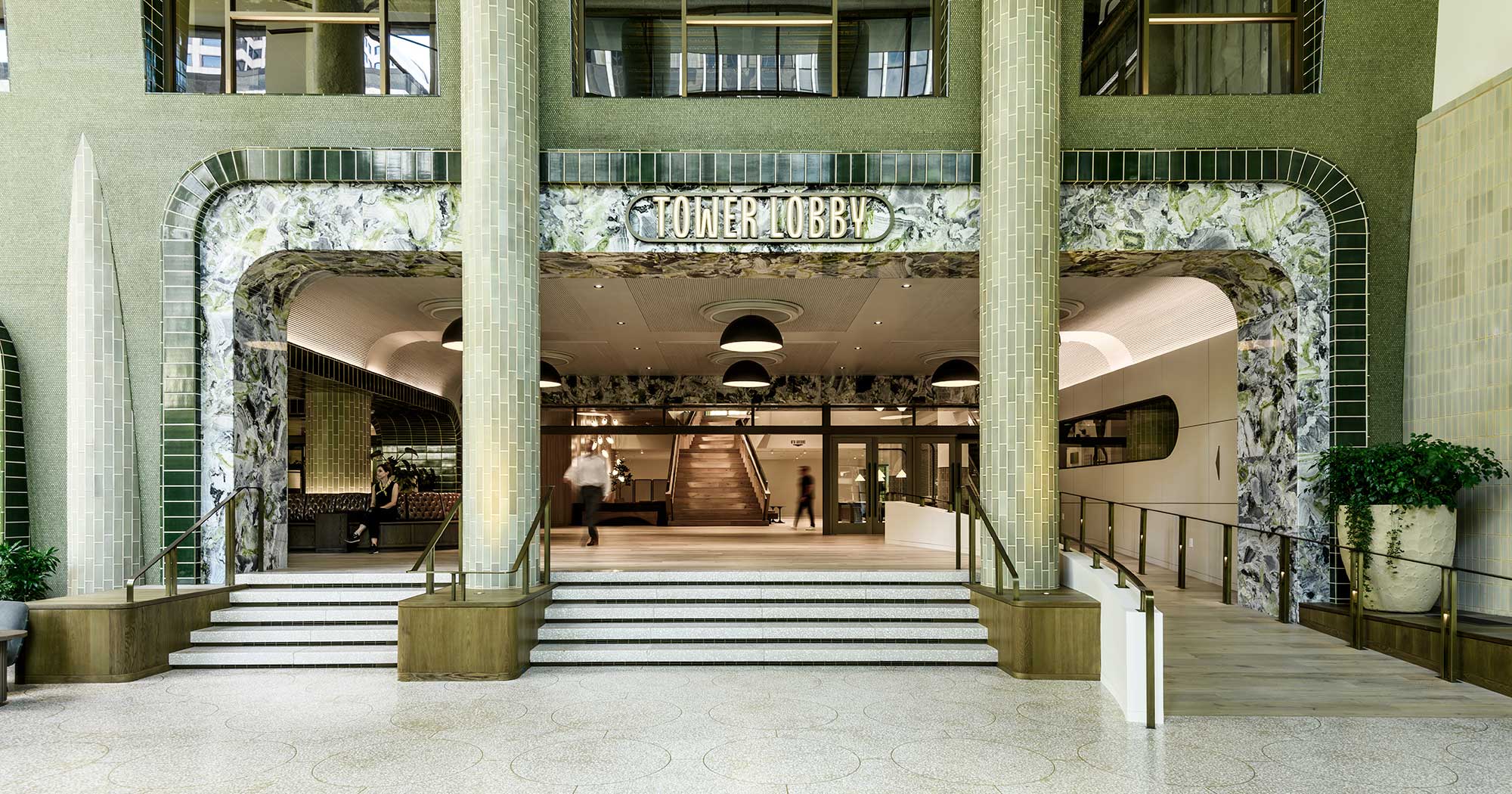
The U.S. Bank Center repositioning reimagines a late-1980s skyscraper as an urban gathering place in Seattle’s retail core.
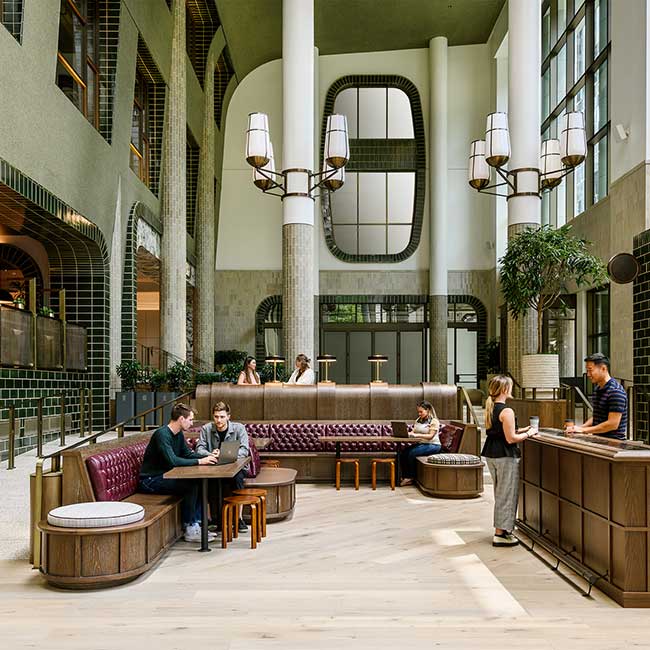
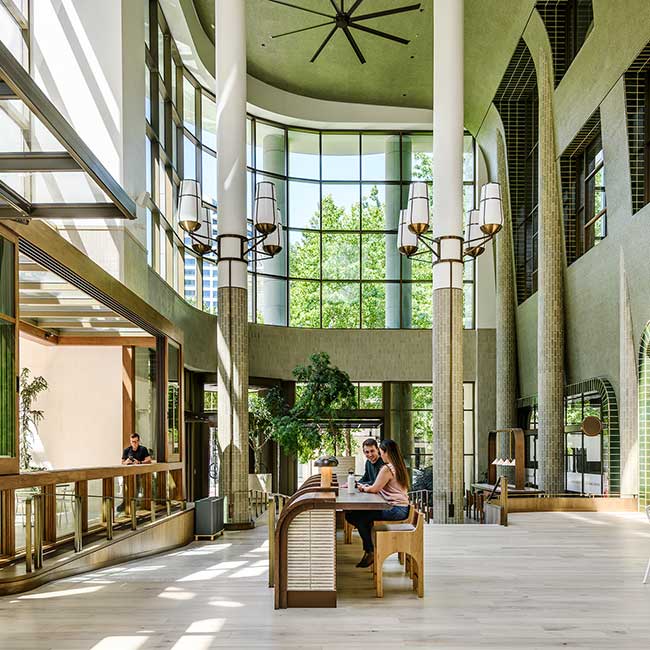
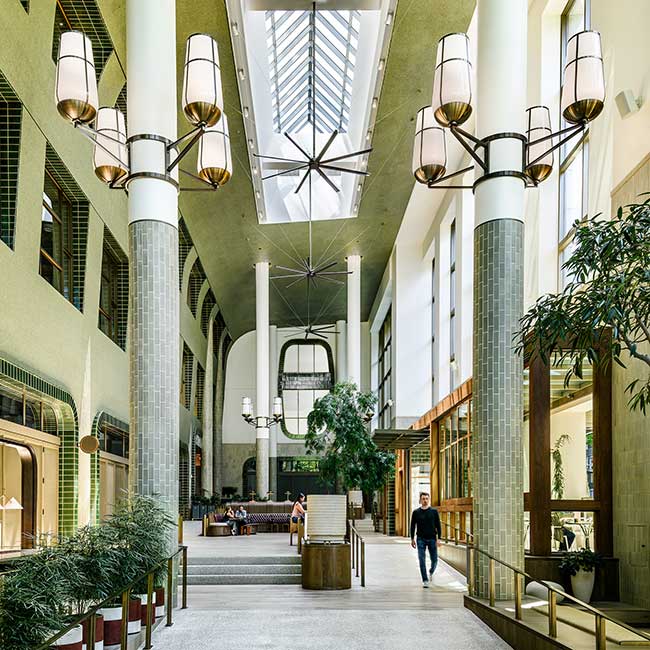
What began as a granite-heavy, confusing, and exclusionary entry sequence has been recast into a generous “indoor streetscape” — Cedar Hall — open, active, and accessible to all. The design stripped away ornamental postmodern massing and finishes to create clarity and porosity. A critical move was reworking circulation: where ADA ramps were once concealed, accessible routes are now part of the primary, easy-to-navigate circulation through the building giving everyone the same arrival experience. This deliberate re-centering of access transformed what was once a hidden accommodation into shared experience. Material and craft anchors the transformation. Over 3.6 million hand-set green penny tiles wrap the hall’s floor and curve overhead into its ceiling. Their surface reflects daylight, echoing the colors of the Pacific Northwest, and turns what could have been a neutral pathway into an immersive, tactile landmark. The tile installation demanded craft precision across every radius, joint, and transition. The result is a surface that shifts with the light throughout the day, grounding Cedar Hall in human-scaled detail. This treatment stands in deliberate contrast to the existing volumetric condition, softening the impact of its monumental scale.
Equally important is the project’s social impact. The previous atrium was inward-facing and functioned like a shopping mall—dominated by escalators and kiosks. While retail amenities remain, they are now supporting elements. Cedar Hall and its adjacent spaces are defined instead by public art, flexible seating, and a mix of coffee, food, and gathering zones. Post-occupancy studies confirm its success: 84% of users rated their comfort at 8/10 or higher and it is consistently a popular stop for tenants, potential tenants, students, and downtown workers. It’s steady use signals vibrancy and inclusivity, offering proof to building ownership and the public that it has become a true community destination.