.svg)


Park Home in Ravenna





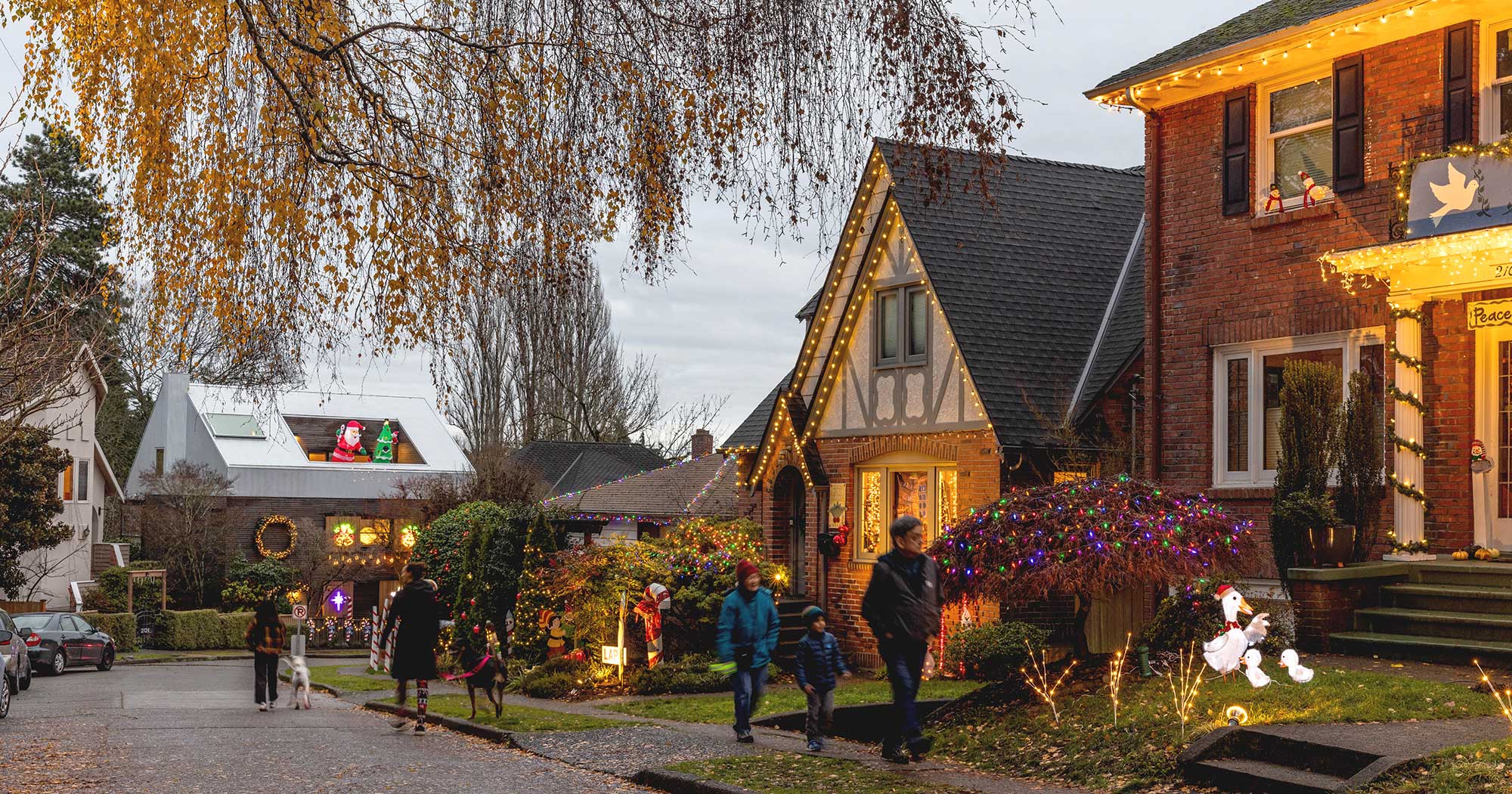
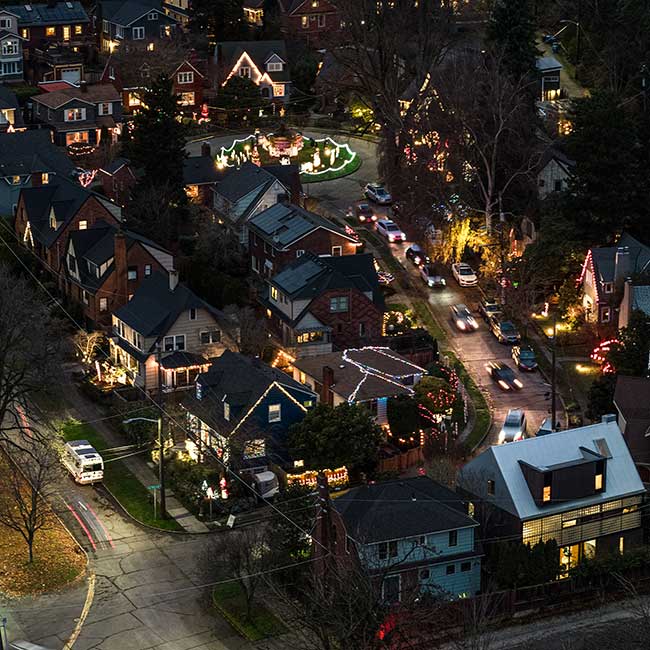
Situated on Seattle’s festive Candy Cane Lane (officially Park Road), the original 1926 brick-and-stucco home was among the first built on lots master-planned in 1922 by Carl Gould, founder of the University of Washington’s architecture department.
With compact lots averaging 3,000 square feet—this one just 2,727—the neighborhood was intentionally dense yet livable, relying on proximity to green space such as Ravenna Park and Park Home Circle to extend daily life outdoors. That planning foresight fostered a close-knit community and eventually gave rise to the beloved holiday tradition that defines Candy Cane Lane today.
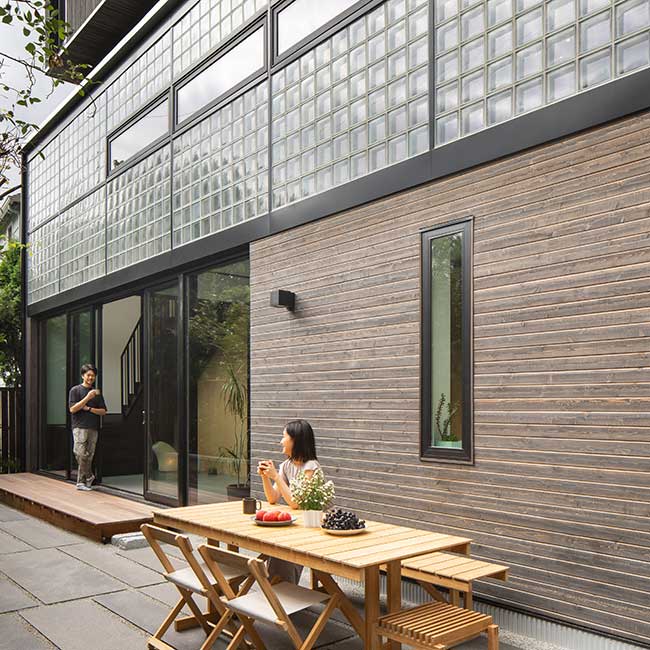
A century later, amid renewed advocacy for density and multigenerational living, the house was reimagined to grow vertically with a third floor and a modest rear addition that straightens the footprint. The design balances added square footage with contextual sensitivity: a familiar gabled roof maintains a low presence along the street while integrating a roof patio for seasonal displays. At the rear, greater freedom allows contemporary interventions—an engawa-inspired transition space enhances indoor-outdoor living, and a second-floor sunroom “borrows” views from Ravenna Park through high-performance glass blocks, bringing precious Seattle daylight deep into the home.
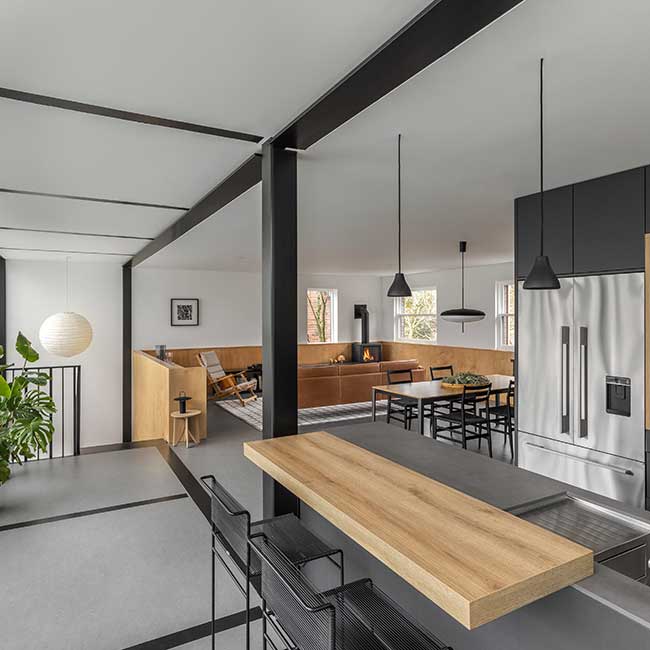
Structurally, new exposed columns and beams form a stilt-like frame around the existing shell, wrapped by a high-performance “cocoon” that upgrades seismic and thermal resilience and anticipates future adaptability. When demolition revealed irreparable brick damage from past seismic events, the concept of “metabolism” was realized immediately. The original layout and window rhythms were carefully reinterpreted, honoring the historic character while preparing the evolved home for another century of neighborhood life.
Awards:
Award of Honor | 2024 Honor Awards for Washington Architecture | AIA Seattle