.svg)


10 World Trade





10 World Trade proposes a new model for commercial development in Boston’s Seaport—one that balances commercial performance with meaningful civic contribution.
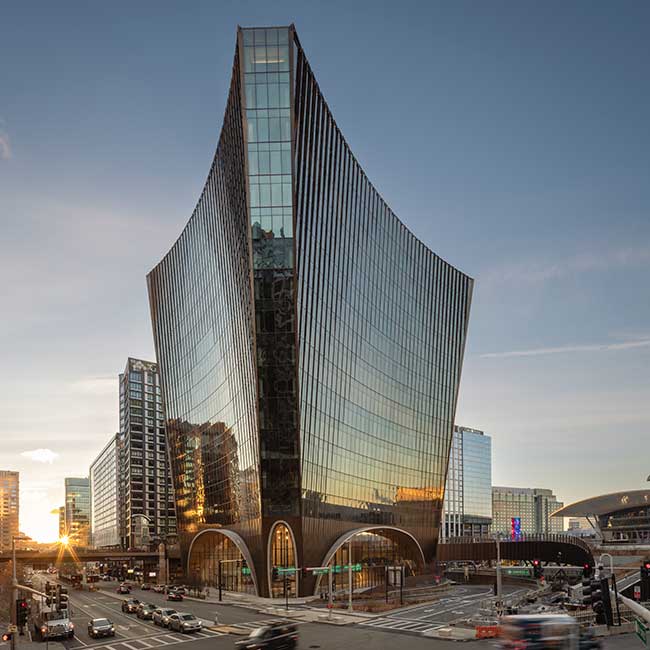
Rising from a site shaped by infrastructure and constrained by airport-related height limits, the project challenges the prevailing development pattern of dense, lot-line podium buildings by prioritizing openness, connectivity, and the public realm.
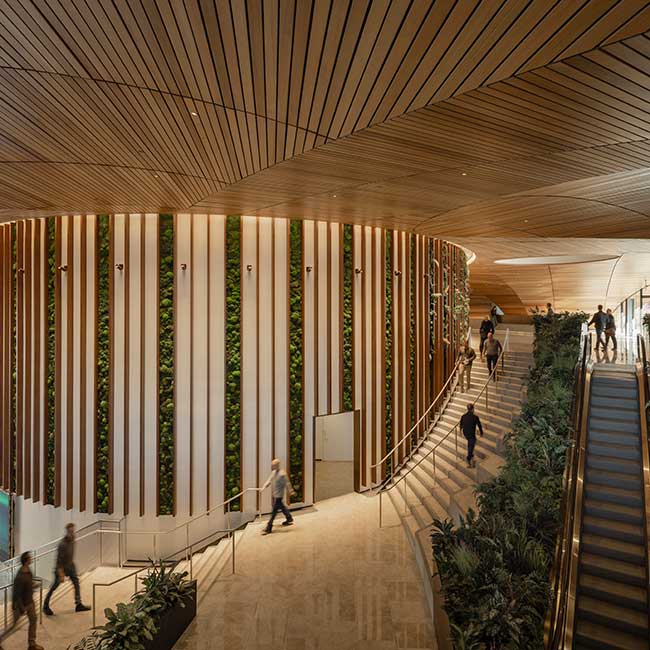
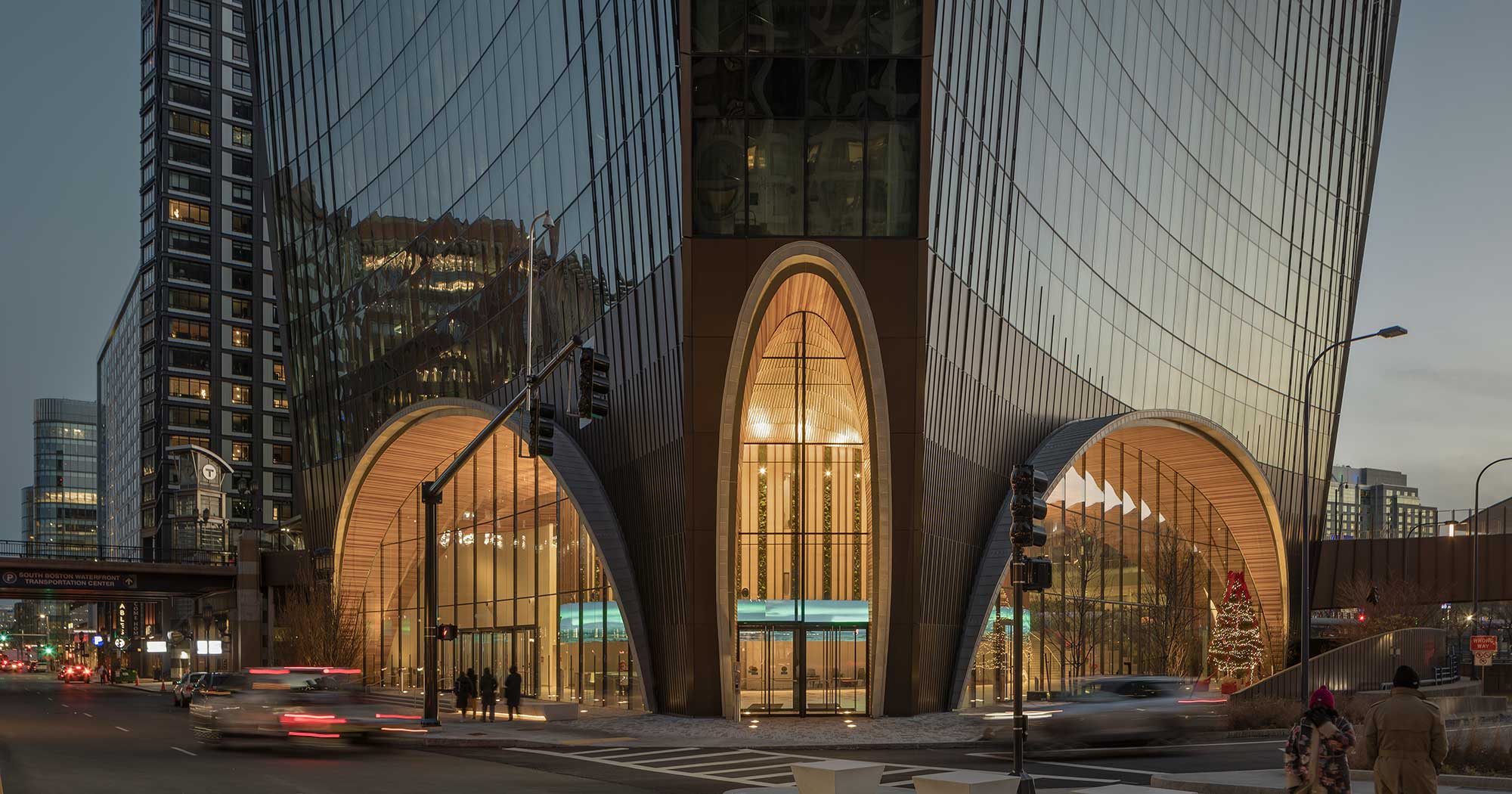
At the heart of the design is more than two acres of publicly accessible open space woven around and through the building. What was once a fragmented and hazardous pedestrian condition at the convergence of surface streets and interstate infrastructure is transformed into a continuous urban promenade that reconnects overlapping layers of the city. Rather than occupying the site edge-to-edge, the building lifts at the ground plane and touches down lightly on four sculpted corners, creating a porous threshold that extends public life into the interior.
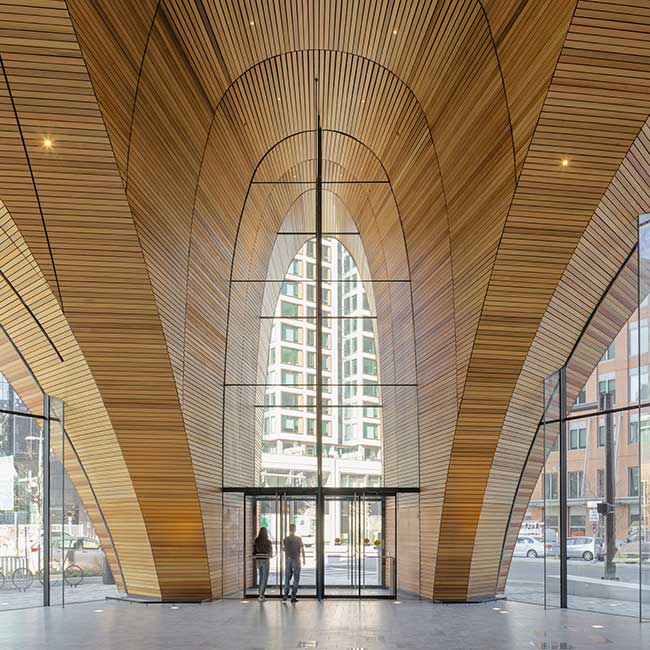
The architecture is defined by sweeping structural arches and a column-free central volume that floods the lobby with daylight and dissolves the boundary between inside and outside. Conceived as “a door for the city,” the building establishes a strong visual identity from every vantage point while enhancing the pedestrian experience at street level. Above, expanding floor plates accommodate over 450,000 square feet of flexible lab and office space alongside cultural programming, culminating in a panoramic indoor running track overlooking Boston Harbor and the skyline beyond.
10 World Trade sets a new precedent for the Seaport: a commercially ambitious building that simultaneously acts as public infrastructure, civic space, and urban connector.